

LONDON — A tense encounter on a British street during Ramadan has gone viral, capturing a moment that many see as emblematic of deeper cultural frictions in multicultural Britain.
In the widely shared video, a Muslim man approaches a passerby who was eating in public, urging him to stop because he himself was fasting. What began as what the confronter likely intended as a polite request quickly escalated into a heated exchange as voices rose and bystanders pulled out their phones to record.
The British man, appearing calm at first, responded by explaining that he was not Muslim and therefore not bound by the rules of the fast. According to witnesses and the circulating footage, the situation took an unexpected turn when the Muslim man seemed to realize he had confronted someone outside his faith community, prompting a sharper dismissal from the eater.
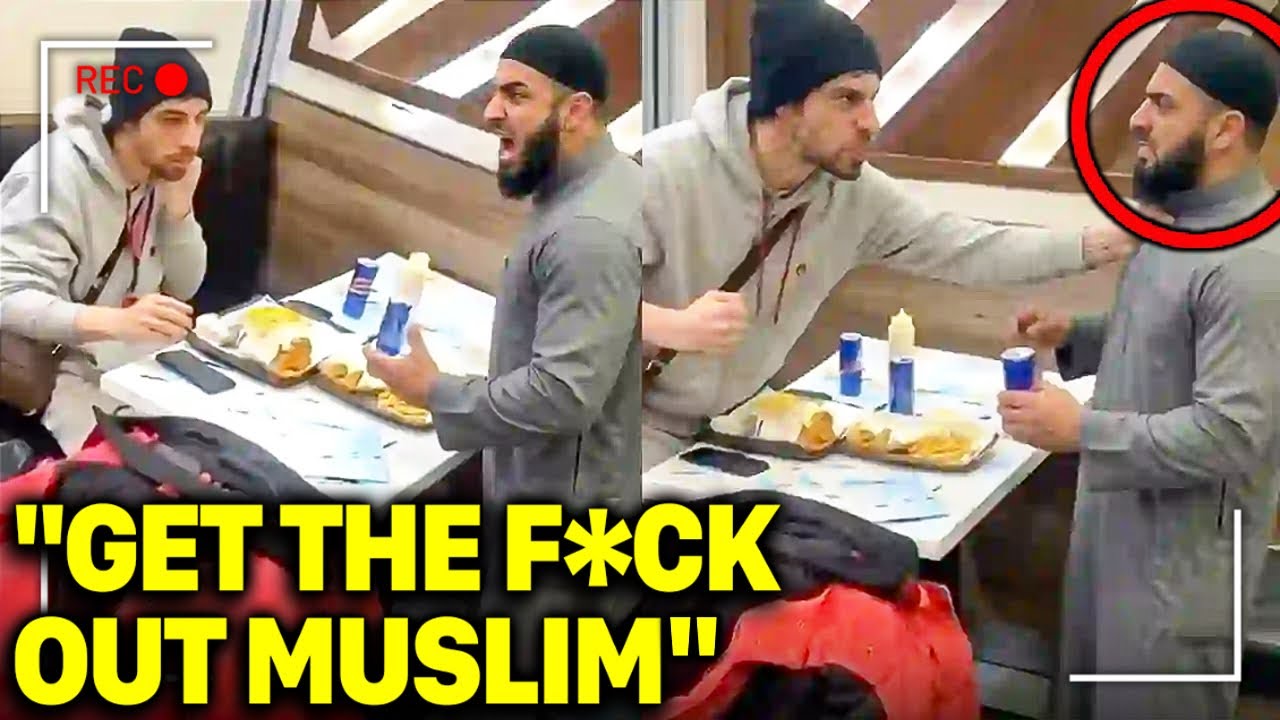
The brief clash left onlookers stunned, with some intervening while others simply watched the awkward standoff unfold in real time. Within hours, the clip had spread rapidly across social media platforms, igniting a fresh wave of heated reactions.
Supporters of the man being confronted hailed the incident as proof of overreach by some within Britain’s Muslim communities. They argued that personal religious observance should not be imposed on the general public in shared spaces, framing the confrontation as an attempt to enforce Islamic norms on non-Muslims.
“Fasting is a personal discipline, not a license to police other people’s lunch breaks,” one popular comment read. Many pointed to similar past videos — on buses, in workplaces or on high streets — where individuals fasting during Ramadan expressed discomfort at the sight or smell of food, sparking accusations of cultural entitlement.
Critics of the viral outrage, including Muslim voices and progressive commentators, countered that the man’s request may have been well-intentioned, rooted in genuine spiritual sensitivity rather than aggression. They noted that Ramadan emphasizes self-restraint, patience and charity, and that isolated incidents should not be used to paint an entire faith of nearly four million British Muslims as imposing their practices.
The episode has reignited long-running debates about integration, public space and the boundaries of religious accommodation in secular Britain. In a country where freedom to eat, drink and behave according to personal choice is taken for granted outside of specific legal restrictions, attempts to influence non-adherents’ behavior during religious periods often provoke strong pushback.
Some observers linked the video to broader concerns about parallel societies and “no-go” expectations in certain neighborhoods, where cultural norms appear to shift according to demographic changes. Polling data has repeatedly shown significant portions of the British public uneasy about the pace of demographic transformation and perceived failures of assimilation.
Defenders of the confronter emphasized context: fasting from dawn to dusk can heighten sensitivity to food cues, and polite requests are not inherently hostile. They warned against inflating the story into evidence of “Islamization,” arguing that most British Muslims fast quietly without demanding others join them.
Yet the timing of such incidents, recurring each Ramadan, has fueled frustration among critics who see a pattern. Right-leaning commentators and ordinary citizens on platforms like X have used the clip to highlight what they describe as creeping demands for non-Muslims to accommodate Islamic practices — from prayer rooms in schools to sensitivities around certain foods or behaviors.
The man in the video reportedly responded with a mixture of bemusement and irritation, underscoring a simple point: Britain remains a non-Muslim majority nation where public life is not governed by the Islamic calendar. His calm but firm rejection resonated with many who feel that tolerance has become one-way traffic.
This latest viral moment arrives against a backdrop of ongoing national conversations about immigration, grooming gang scandals, Islamist extremism and social cohesion. Events like these, however minor individually, accumulate in public consciousness and contribute to the polarized atmosphere surrounding multiculturalism.

As reactions continue to pour in, some call for greater mutual respect and clearer expectations that religious observance remains personal. Others see it as another symptom of unresolved integration challenges that politicians have long avoided addressing head-on.
Whether this street confrontation fades as another fleeting social media storm or adds momentum to demands for firmer cultural boundaries remains to be seen. In the meantime, it has once again exposed the raw nerves beneath Britain’s experiment with diversity.
For many watching the footage, the real question is not who was right in that single awkward exchange, but whether a society can sustain public spaces where everyone feels equally at home without one group’s sensitivities overriding the freedoms of others.


