

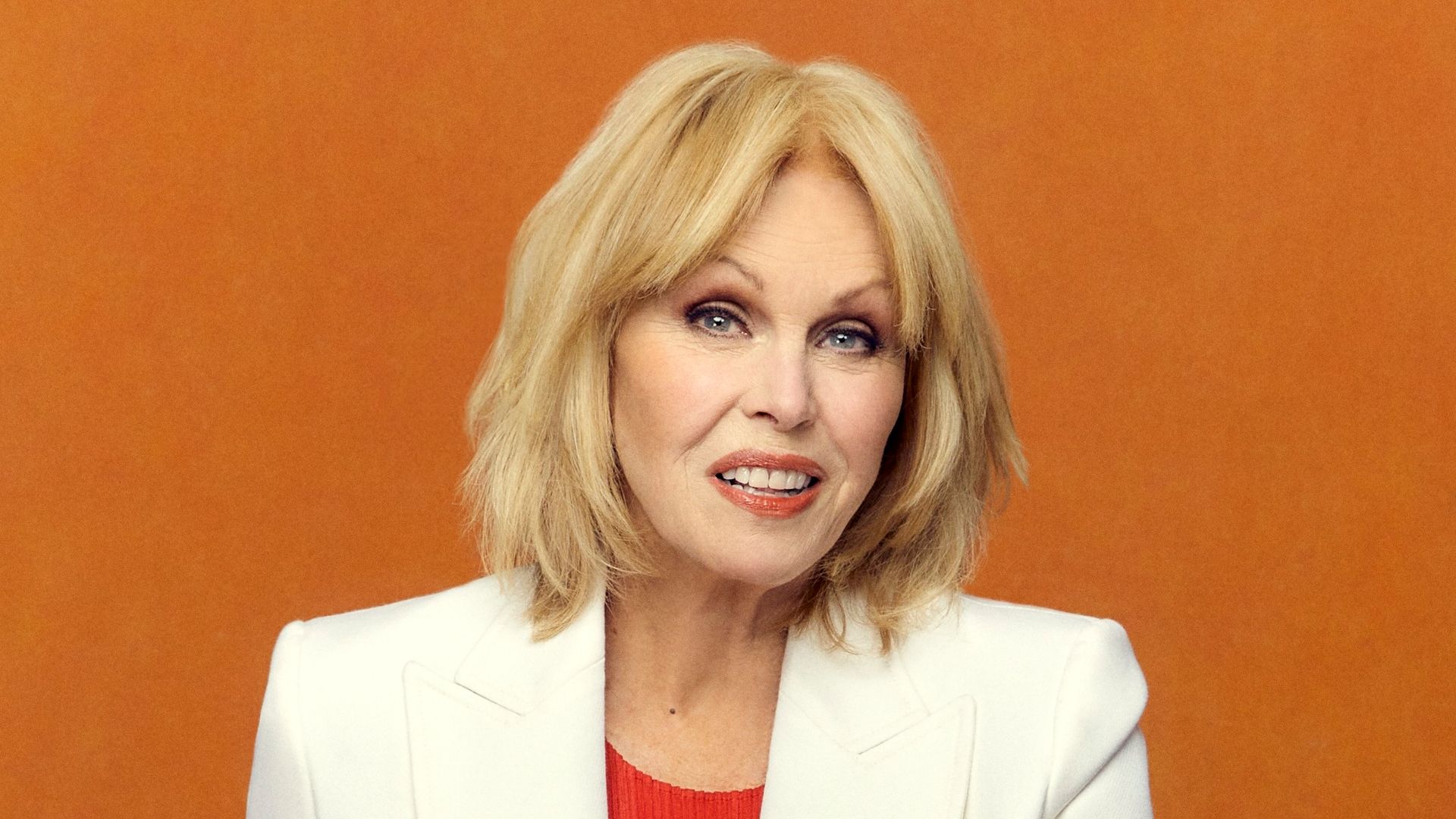
LONDON — Dame Joanna Lumley, the beloved actress and national treasure best known for her role in “Absolutely Fabulous,” has ignited a fierce political firestorm after warning that Britain’s capacity to absorb mass migration is reaching a breaking point. Her blunt assessment — “our small nation cannot feed millions” — has divided the country, with critics condemning her remarks as divisive while supporters argue she has voiced a concern that many Britons feel but few dare to express.
The controversy erupted during a conversation at the Cheltenham Literature Festival, where Lumley, 79, offered reflections on migration that quickly eclipsed her comments about life and death. According to reports in The Express and other British outlets, the actress urged a shift in focus from border controls to the root causes that compel people to leave their homelands — but her framing of Britain’s capacity has become the flashpoint .
“I think most people would rather remain in their own homeland,” Lumley was quoted as saying. But it was her characterization of Britain as a “tiny country” that “cannot feed millions” that has since ricocheted across social media and dominated broadcast news cycles .
The timing of Lumley’s remarks is significant. Just two months ago, a long-delayed government report from the Department for Environment, Food and Rural Affairs — prepared with input from the Joint Intelligence Committee, which oversees MI5 and MI6 — concluded that the global loss of nature poses a direct threat to British security . The report warned that ecosystem collapse could drive conflict, migration, and higher food prices that would hit the United Kingdom at home .
Central to that assessment was a finding that resonates uncomfortably with Lumley’s comments: the United Kingdom cannot feed itself. The country imports roughly 40 percent of its food, relying on fragile global supply chains for fresh fruit, vegetables, sugar, and animal feed . It is also not self-sufficient in fertilizer, further exposing its agricultural system to international shocks .
“The UK does not have enough land to feed both people and livestock at current levels of consumption,” the government’s own security assessment concluded . The report warned that significant disruption to international markets caused by ecosystem degradation would put British food security at risk, potentially leading to “more polarised and populist politics” .
Lumley’s intervention has brought these technical findings into the public square with a force that government reports rarely achieve. For supporters, she has done what politicians have failed to do: speak plainly about the material limits of a small island nation with a growing population.

“She is saying what the government’s own intelligence chiefs have confirmed,” said one commentator on social media. “Britain cannot feed itself. Adding millions more people without a plan is not compassion — it is negligence.”
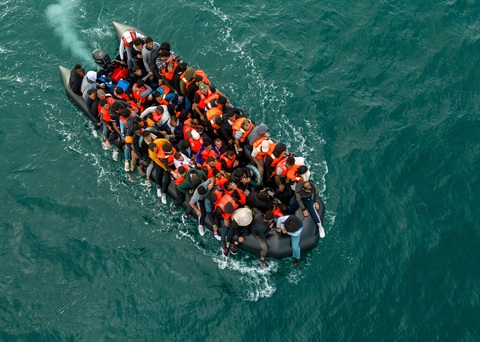
But critics argue that Lumley’s framing is dangerously simplistic. They point to the government’s own analysis, which identifies the root causes of migration — warfare, food shortages, and ecosystem collapse — as the primary drivers of displacement . Addressing those causes, they argue, is the only sustainable solution.
“Dame Joanna is right that we need to focus on why people are forced to leave their homes,” said a spokesperson for a refugee advocacy group. “But her language suggests Britain is too small to share its resources, when the real problem is a global system that creates scarcity while some nations consume far more than their share.”
The debate over immigration and food security has been quietly building for months. A government report released in January warned that biodiversity loss and climate change would increase migration as more people cross the threshold into food insecurity . According to a 2021 study cited in the report, even a 1 percent increase in food insecurity compels 1.9 percent more people to migrate .
The same report acknowledged that Britain’s food system is embedded in “a complex, global socio-political system which is increasingly volatile and fragile” . Tim Benton, a professor of population ecology at the University of Leeds, told Courthouse News that the country’s reliance on global markets leaves poorer households most at risk when prices rise .
“The belief that food supplies will be stabilized through technology is likely to be insufficient,” Benton said, warning that agricultural change and dietary shifts will be inevitable .
Lumley’s remarks also intersect with broader anxieties about immigration that have reshaped British politics. Immigration is now the most contentious issue in the country, as divisive as Brexit was a decade ago . The food and drink industry, which relies heavily on overseas workers, has warned that labor shortages threaten production — even as populist voices call for stricter controls .
“The protectionist voices will grow ever louder,” wrote Ian Wright, a partner at Acuti Associates, in The Grocer last month. “Yet these will be the same critics who complain of food shortages when there’s no one to pick crops, or of fast rising prices when scarcity strikes” .
Lumley has not backed away from her comments, though she has not amplified them either. The actress, who has long been active in humanitarian causes, including support for Gurkha veterans, has built a reputation over five decades as one of Britain’s most beloved public figures . That reputation is now being tested.
What makes her intervention so potent is precisely her stature. She is not a politician angling for votes or a pundit seeking attention. She is a national treasure whose words carry weight precisely because she has rarely waded into such contentious waters.

For Prime Minister Keir Starmer, the Lumley firestorm presents yet another challenge on an issue that has proven resistant to political management. His government’s own policies — including proposals to extend the settlement period for migrants — have drawn criticism from both sides . And now a beloved actress has given voice to concerns that his administration has struggled to address.
As the clip of Lumley’s remarks continues to circulate, the question hanging over the debate is whether Britain can have a conversation about the limits of its resources without descending into division. The government’s security assessment offers a sobering conclusion: “It is unlikely the UK would be able to maintain food security” without dramatically increasing the resilience of its food systems .
Whether that resilience can be built while also maintaining a compassionate approach to migration is the question that now divides the nation. Lumley has forced it into the open. Where it goes from here is anyone’s guess.


