

Is the United Kingdom about to grind to a complete standstill?
Just days after Ireland was rocked by six consecutive days of escalating chaos, a powerful wave of unrest is now threatening to cross the Irish Sea and explode onto British soil. Farmers, truckers, and frustrated working-class groups are reportedly joining forces to launch a massive nationwide blockade that could bring roads, supply chains, and daily life across the UK to a grinding halt as early as next week.
The protests in Ireland began as a furious response to soaring fuel prices, triggered by global tensions and a sharp spike in oil costs. What started with road blockades quickly grew into large-scale demonstrations involving thousands of tractors, trucks, and local workers. Protesters claim government policies are not only hitting their wallets hard but also harming traditional ways of life. Irish authorities responded by deploying police and even the military, labeling some groups as “far-right agitators,” yet the blockades persisted for six full days, causing major traffic chaos, fuel shortages, and tense standoffs.
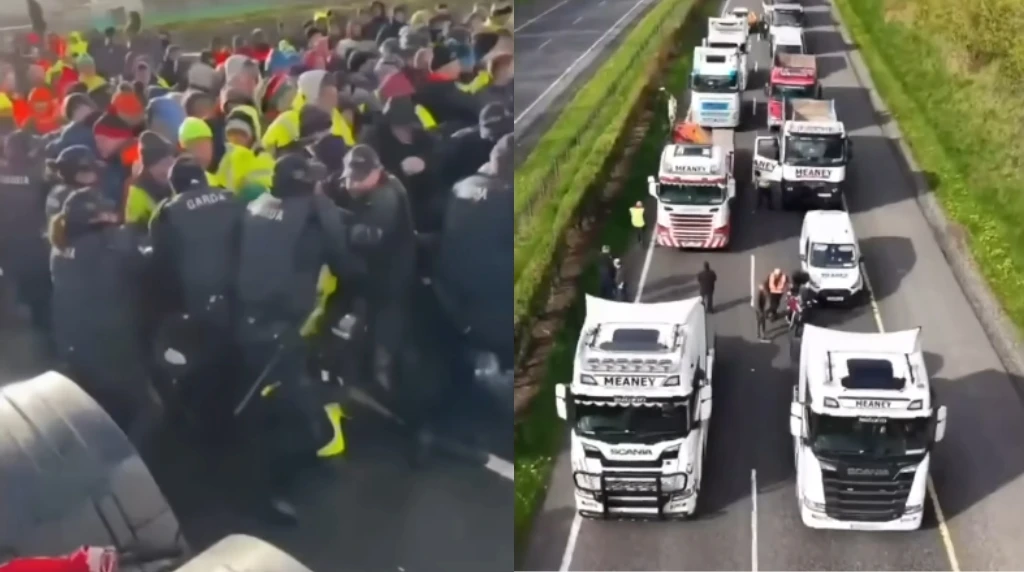
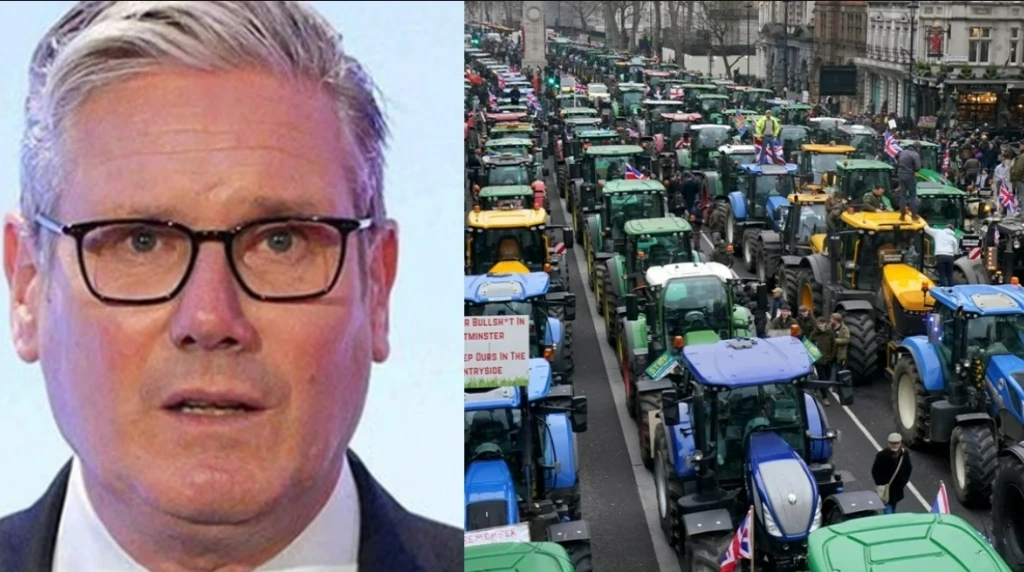
Now, the momentum appears unstoppable. Reports indicate that similar actions are already being prepared in Northern Ireland, with the first major protest possibly kicking off as soon as Tuesday. Meanwhile, farming communities in England are set to hold urgent meetings next week to coordinate a widespread campaign of disruption.
The immediate spark is the explosive rise in diesel prices, which have surged past £2 per litre at some pumps. UK farmers, still furious over recent inheritance tax changes introduced by the Labour government, are now aligning with truck drivers and ordinary workers who are struggling under the weight of these record fuel costs. Analysts warn that this potential alliance could create a protest movement far larger and harder to contain than anything seen in recent years.
At the heart of the growing anger is the structure of fuel pricing itself. While wholesale costs make up only about one-third of the price at the pump, a huge portion comes from government fuel duty — the biggest single slice of revenue for the Treasury. Critics accuse the Starmer government of refusing to offer meaningful relief through tax cuts, even as households and businesses face crippling increases.
Energy Secretary Ed Miliband has tried to portray the government as standing with ordinary people, but protesters argue the numbers tell a very different story. With VAT and retailer margins also factored in, many feel the burden falls heaviest on working families while the government continues to collect billions.
If Ireland-style blockades take hold in Britain, this could become the most serious public order challenge for Keir Starmer’s Labour government since it took power. Tensions are rising rapidly, coordination between protest groups is underway, and the risk of widespread disruption looms large.
As the domino effect builds, Prime Minister Starmer may soon find himself facing an unprecedented test — caught between mounting economic pressures, public fury, and the very real threat of national paralysis on the roads.
Will the UK escape the chaos unfolding across the water, or is a major confrontation inevitable?


