


The death of a D-Day veteran has sparked tributes from every corner of Britain.
Alec Penstone, who died yesterday at the age of 101, was responsible for stopping U-boats on D-Day, serving as a submarine detector aboard HMS Campania.
The Isle of Wight resident went viral last year after a clip showed the World War Two veteran expressing regret about the state of modern Britain.
Appearing on ITV’s Good Morning Britain, the former Royal Navy serviceman said: “My message is, I can see in my mind’s eye the rows and rows of white stones of all the hundreds of my friends and everybody else that gave their lives for what? The country of today. No, I’m sorry, the sacrifice wasn’t worth the result that it is now.”
Mr Penstone continued: “What we fought for, and what we fought for, was our freedom. We find that even now it’s downright worse than when I fought for it.”
Following his death, the Royal Naval Association said in a statement: “A proud wartime veteran, Alec lived an extraordinary life of courage, service and resilience, and leaves behind a legacy that will never be forgotten.
“Alec was just 15 years old when war broke out. As the blitz devastated London, he volunteered as a part-time air raid precautions messenger, serving throughout 1940 and 1941.
“Reflecting on those difficult days, Alec once said: ‘At 15 years of age, pulling bodies out of bombed buildings, you grow up very quickly.’ As soon as he was old enough, Alec joined the Royal Navy.”
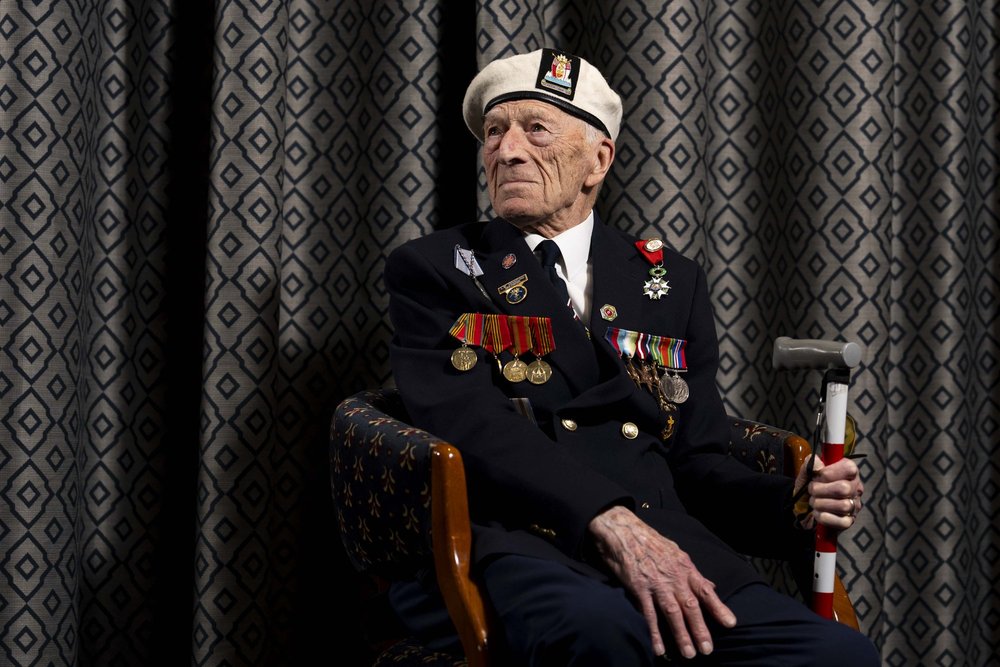
Alec Penstone died yesterday at the age of 101 | PA
The association reported Mr Penstone as saying: “My mates were all going up, joining up, and I decided that I don’t want to stay there any longer. I went and joined the Royal Navy, as a HO (hydrographic officer), and that was the start of it.”
The statement added: “Alec served aboard HMS Campania, an escort aircraft carrier tasked with sweeping for mines and hunting U-boats.
“Much of his service was spent three decks below on constant action stations, listening for torpedoes, mines and enemy submarines in the unforgiving conditions of the Atlantic and Arctic seas.
“He went on to complete 10 Arctic convoys, returning home forever shaped by the experience and sacrifice of war.


