

The hallowed halls of the Australian Senate are no strangers to heated rhetoric, but rarely does a speech pierce through the veneer of bureaucratic consensus with the raw intensity of a lightning strike. What began as a standard legislative session recently transformed into a national flashpoint when Senator Malcolm Roberts took the floor to deliver a blistering, unfiltered assessment of the country’s climate trajectory.
His message was as concise as it was controversial: “Net Zero is a scam.”
With those four words, Roberts didn’t just critique a policy; he declared war on what he views as a globalist orthodoxy that is systematically dismantling the Australian way of life. The speech, which has since gone viral across social media platforms, marks a significant escalation in the domestic “climate wars,” signaling a growing populist resentment toward the economic costs of the green energy transition.
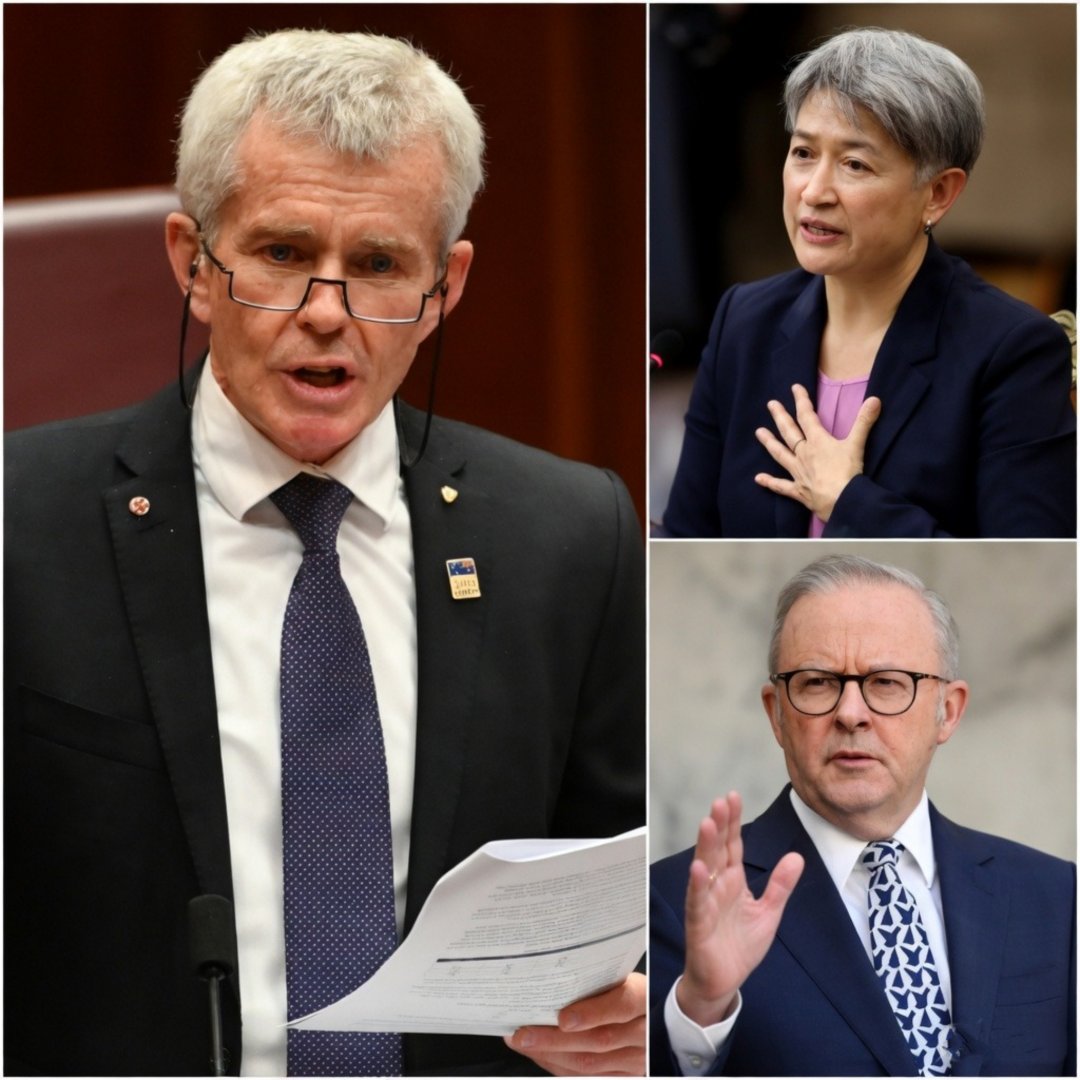
A “Fraud” Against the People
Roberts began his address by dismantling the moral high ground often claimed by proponents of decarbonization. To the Senator, the transition to a carbon-neutral economy isn’t an environmental necessity, but a calculated fraud. He argued that the premise of Net Zero is built upon shaky scientific foundations and manipulated economic modeling designed to transfer power from the individual to the state.
The Senator’s choice of language—specifically the word “fraud”—is a direct challenge to the legal and ethical legitimacy of the government’s current energy mandates. By framing the policy as a deceptive practice, he suggests that the Australian public is being sold a “green utopia” that will never actually materialize, regardless of the sacrifices made.
The Economic Toll: “Heating or Eating”
Perhaps the most visceral part of Roberts’ speech focused on the kitchen-table reality facing millions of Australian families. He painted a grim picture of an economy “crippled” by ideological rigidity. As coal-fired power stations are shuttered in favor of intermittent renewables, the stability of the national grid has faltered, and prices have predictably skyrocketed.
“We are forcing Australian families to choose between heating and eating,” Roberts declared, highlighting a burgeoning cost-of-living crisis.
For the average citizen, the abstract goals of “2050 targets” feel a world away when the monthly electricity bill consumes a disproportionate share of a stagnant paycheck. Roberts argues that this is not an accidental byproduct of the transition, but an inevitable consequence of abandoning reliable, low-cost energy for expensive, unproven alternatives.
The Destruction of the Australian Business Landscape
It isn’t just households feeling the squeeze. Roberts pointed to the systematic “crushing” of small and medium-sized businesses. Industries that rely on high energy inputs—manufacturing, smelting, and agriculture—are finding it increasingly impossible to remain competitive on the global stage.
When energy prices in Australia dwarf those of its regional competitors, capital begins to flight. Roberts warned that the Net Zero mandate acts as an invisible tax, slowly strangling the lifeblood of the private sector and discouraging entrepreneurship. “We are exporting our prosperity,” he noted, “while importing the very goods we used to make, often produced in countries with far lower environmental standards.”

“Green Religion”: Ideology Over Reality
In a move that ruffled feathers across the aisle, Roberts branded the push for Net Zero a “green religion.” This phrasing suggests that the climate movement has moved beyond the realm of scientific inquiry and into the territory of dogma. In this “religion,” dissent is treated as heresy, and the “pain” inflicted on the working class is viewed as a necessary penance for the sins of industrialization.
By framing it as a cult-like devotion, Roberts tapped into a growing sentiment that the ruling elite is more concerned with signaling their virtue at international summits than with the practical welfare of the workers who keep the country running. He argued that this ideological fervor has blinded policymakers to the catastrophic real-world outcomes of their decisions.
The Job-Killing Machine
The Senator was particularly empathetic toward the blue-collar workforce. He argued that Net Zero is a “job-killing machine” that targets the very heart of the Australian labor force. From coal miners in Queensland to factory workers in Victoria, the “green transition” often feels like a death sentence for entire communities.
While the government promises “green jobs” as a replacement, Roberts dismissed these as largely illusory or taxpayer-subsidized. He pointed out that for every job created in a solar farm, multiple stable, high-paying roles in the traditional energy sector are being liquidated, leaving families stranded in a “new economy” that doesn’t seem to want them.

Follow the Money: Billions Funneled Overseas
One of the most provocative claims in the Senator’s speech concerned the flow of capital. Roberts alleged that Net Zero policies are effectively a mechanism for funneling billions of Australian dollars overseas. This occurs through the purchase of foreign-made solar panels, wind turbines, and battery components—predominantly manufactured in China using the very coal energy Australia is forbidden from using.
This “wealth transfer,” according to Roberts, does nothing to help the local economy. Instead, it enriches foreign conglomerates and state-owned enterprises while the Australian taxpayer foots the bill for “subsidies” that prop up an inefficient energy system.
The Environmental Paradox
In a final blow to the policy’s core justification, Roberts argued that these draconian measures deliver “no real environmental benefit.” He pointed to the global reality: while Australia (which accounts for a tiny fraction of global emissions) deindustrializes itself, countries like China and India continue to build hundreds of new coal-fired plants.
If the goal is truly to impact global CO2 levels, Roberts contends that Australia’s self-immolation is an exercise in futility. The “benefit” is zero, while the “cost” is total. This logical gap—the idea of a localized sacrifice for a non-existent global result—is a cornerstone of the public’s growing skepticism.

A Wave of Public Outrage
The Senator concluded his speech by acknowledging a shift in the national mood. He described a “wave of public outrage” that is beginning to crest. No longer confined to the fringes of political discourse, the anger over energy prices and economic decline is entering the mainstream.
From rural “Rally against the Rails” protests to suburban frustration over grocery prices, the disconnect between Canberra and the “real Australia” has never been wider. Roberts’ speech serves as a warning to his colleagues: the public’s patience with “Net Zero” is not infinite, and the political fallout of these policies may soon be unavoidable.
Conclusion: The Shifting Political Sands
Whether one views Malcolm Roberts as a visionary truth-teller or a dangerous contrarian, his speech has undeniably shifted the parameters of the debate. By calling Net Zero a “scam” and a “fraud,” he has given a voice to a silent majority that feels disenfranchised by the current political consensus.
As the 2026 election cycles approach, the “heating vs. eating” dilemma will likely become the defining issue of the era. If the economic pain continues to mount, Roberts’ “blistering” speech may one day be looked back upon not as an outlier, but as the first major crack in the dam of the green energy movement.
For now, the Senate floor remains a battlefield, and the casualties of the “Net Zero” war are the very citizens the government is sworn to protect. The question remains: can the nation afford the cost of its own perceived virtue? If you ask Senator Roberts, the answer is a resounding, fiery “No.”


